Excavator Hire in Darling Heights, Toowoomba
Book the wrong size machine and you can lose the day: it will not fit past the side gate, or it is too light for the ground. Get the size right for your Darling Heights block first.
Excavator hire in Darling Heights covers two very different kinds of job. Streets of older homes, duplexes and units need a small machine that fits down the side of the house. Bigger holdings can take a larger excavator or a posi track, which is a rubber-tracked machine that copes well with soft or sloping ground. Measure the side gate before you book, because that one number rules machines in or out.
Excavator hire in Darling Heights, Toowoomba: edge holdings and tight blocks
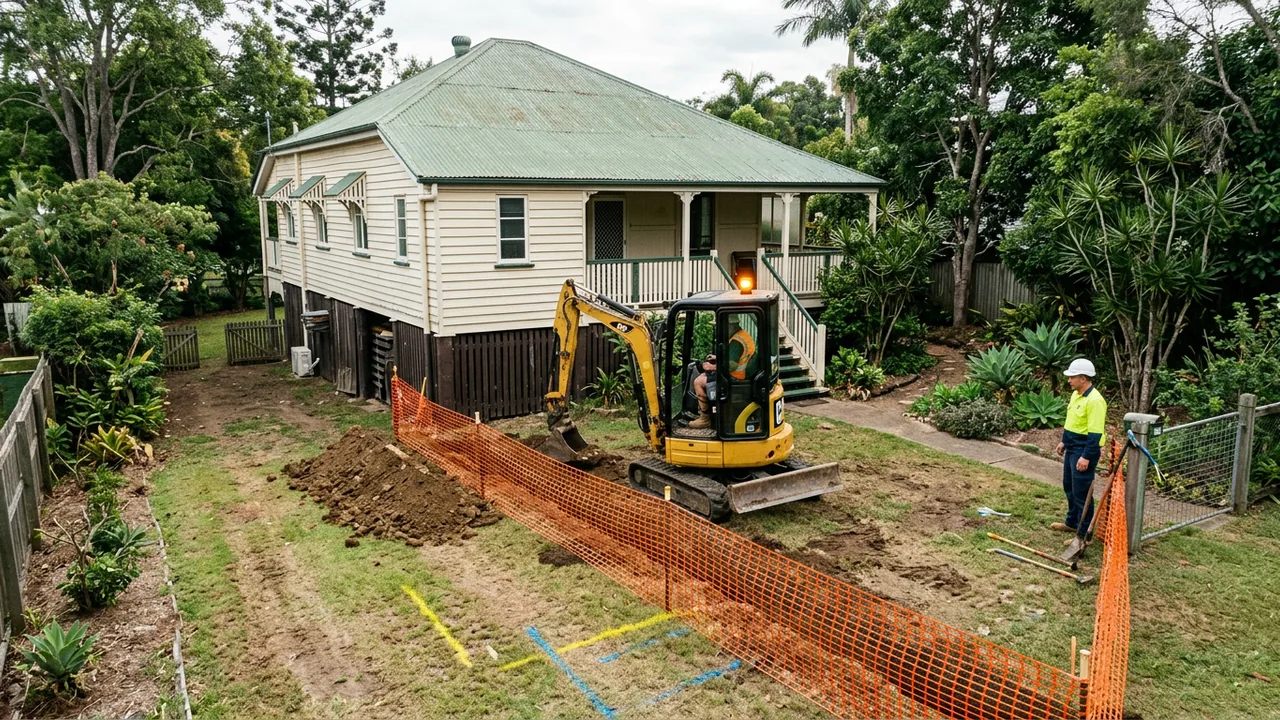
On a standard house block the gate width and the gap beside the house decide the machine, not the size of the job. A mini excavator or a Dingo (a compact mini loader you walk behind or stand on, which fits through narrow access) can still dig a pool hole, footings or a retaining wall base.
A bigger holding changes the question. There is room to float a larger machine in, turn it around and stockpile soil clear of the fence line. That suits dams, shed pads, long drainage runs and driveway cut and fill.
Spoil needs somewhere to sit as well, so the path in and the space to turn are worth thinking through before the machine arrives.
Which machine suits your dig?
Mini excavators suit backyard work: post holes, small trenches, slab edges and stump removal. A Dingo is the pick when access is tight and the job is light. Larger excavators suit deep trenches, big pads and heavy soil.
A posi track sits in between and earns its place on acreage. Its wide rubber tracks spread the weight, so it travels over lawn and paddock with less damage and handles a slope better than a wheeled machine.
Attachments change what one machine can do. An auger drills post holes and pier footings quickly. A tilt mud bucket (a bucket that angles side to side) shapes drains and batters cleanly. A GP bucket, the general purpose digging bucket, does the bulk of the work. Local hire businesses can bring these attachments with the machine, which often saves a second visit.
Land clearing on a larger holding
Land clearing here usually means removing scrub, old fence lines, stumps or a dumped pile of fill before a shed or house goes in. A bigger excavator or a posi track does this faster than a mini machine, and it can stack material into heaps for removal.
A good operator watches for fence lines, underground services and where water runs off the block, because clearing changes how rain moves across the ground. Where a pad is needed afterwards, the same machine can cut and level it.
If the clearing is large, a wet hire with an operator is often the better choice. An operator who knows sloping ground comes with the machine, which matters where the fall decides where the spoil can go.
Wet hire or dry hire?
Dry hire means the machine arrives and you run it yourself on your own land. Wet hire means an operator comes with it and does the digging.
Dry hire suits a simple dig where you are comfortable at the controls. Wet hire suits deep trenches, work close to the house and sloping blocks, and anyone who would rather not learn on a tracked machine. The operator does the digging, so you are not learning the controls on your own block.
It is worth asking when the machine was last serviced, and looking for hydraulic oil leaks when it is dropped off.
What does it cost, and what is set out first?
The hire rate, the minimum hire period and any float charge are the three numbers that shape the bill. A float charge covers trucking the machine to your address and back, and GST applies on top. The hire business sets these out before you book, so you can estimate the bill before the machine leaves the yard.
On a standard Darling Heights block a mini excavator usually travels on a trailer, which keeps the float charge down. A larger machine for a bigger holding needs a truck, so matching the size to the dig saves money as well as time.
What Darling Heights ground and access mean for the dig
Darling Heights lies about 5 km south-west of the Toowoomba CBD, and the housing mix decides which machine goes where. Standalone homes, duplexes and low-rise units sit close together, so a small machine and careful positioning matter on the tighter lots.
The University of Southern Queensland Toowoomba campus fills a large part of the eastern side of the suburb, and streets stop at its boundary rather than running through. A truck carrying a machine can reach a back street by a longer route than you expect. Landmarks such as the UniSQ Library or Darling Heights State School help a driver place an address quickly.
The western and south-western sides keep much larger lots, and a posi track or bigger excavator becomes an option there.
Say what you are digging, how long the run is and how the ground falls.
Services in Darling Heights
- Excavator hire with operator A machine and a skilled operator arrive together, so the digging gets done while you get on with your day.
- Digger and backhoe hire Diggers and backhoes sized for footings, spoil loading and yard clearing on local homes and small sites.
- Dingo and mini loader hire Dingo and Kanga mini loaders for levelling, shifting soil and small trenches around paths, beds and fences.
- Posi track and skid steer hire Posi tracks and skid steers for levelling, site clean-up and spreading fill where ground is soft or uneven.
- Excavator attachments and augers Augers, tilt mud buckets and GP buckets fitted to the machine for post holes, footings and neat trenches.
- General plant hire Tipper trucks, loaders, dozers and rollers alongside the excavator when one machine will not cover it.
- Mini excavator hire Compact digger hire for backyard digs, trenches and footings where a side gate rules out bigger machines.
- Excavator dry hire Hire an excavator without an operator, collect or have it floated in, and dig your own block your way.
Frequently Asked Questions
How long should an excavator hire business have been trading before I book it for a Darling Heights dig?
Get it priced
Got a trench, pad or yard to dig out? Tell us the job and get the right machine on site.
Share the details and we will help you take the next step with confidence.