Plant Hire Toowoomba for Bigger Excavator Jobs
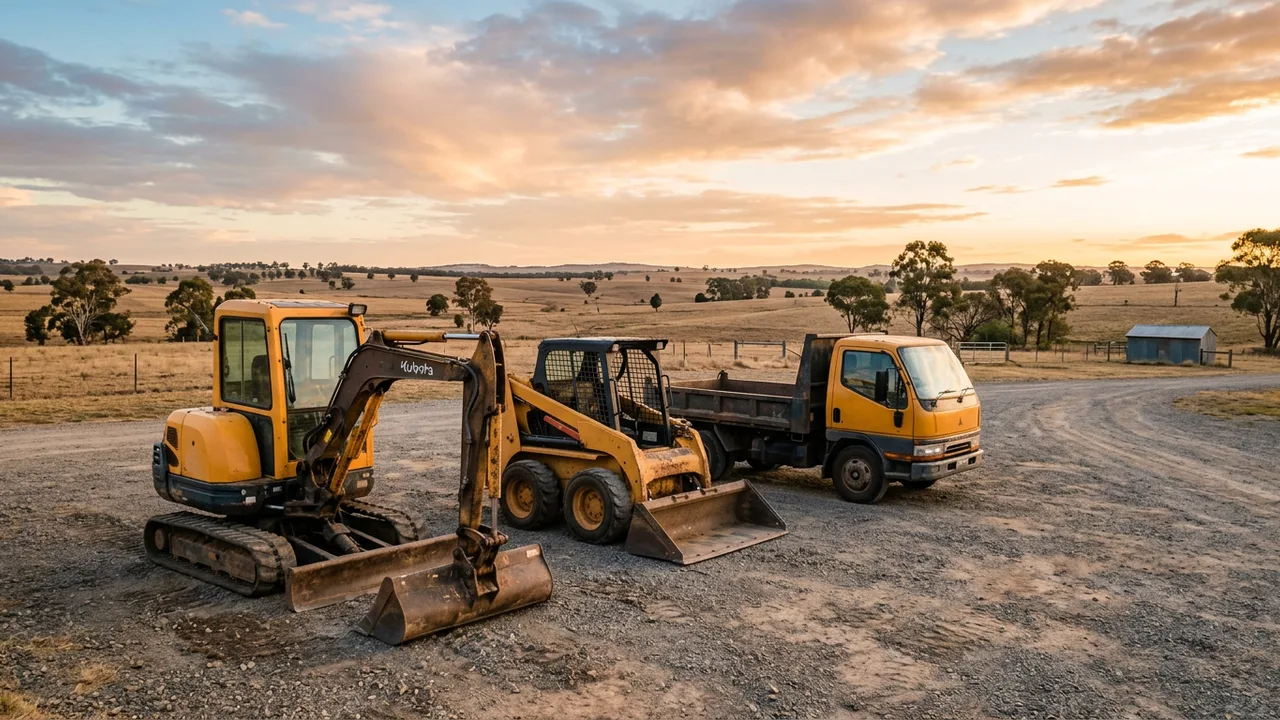
One digger cannot move, spread and compact everything on a big job. Plant hire in Toowoomba puts a tipper, loader or roller beside the excavator, sized for sloping blocks on the range and tight side access.
Spoil has to leave the site, gravel has to arrive, and the pad has to be shaped and compacted. A tipper, a wheel loader or a roller handles each of those jobs while the excavator keeps digging.
Plant hire in Toowoomba: what works alongside the excavator
Most big jobs stall on the same problem. The excavator digs faster than the dirt can be shifted, and a growing heap soon blocks the next cut.
A tipper truck fixes that by carting spoil away as it is dug. A wheel loader does a similar job on site, lifting loose material into the truck or stockpiling it. Together they let the excavator stay on the trench, footing or cut instead of stopping to push dirt around.
A dozer suits wide, open ground such as a house pad on a larger block. On a tight block with narrow side access, the kind you find in older streets of Newtown or East Toowoomba, a loader and a small tipper will usually fit where a dozer will not.
Rain changes the picture too. Many Toowoomba blocks slope, and clay ground turns slick when wet, which can stop a loaded tipper. A smaller truck or an extra dry day may be the better plan.
Excavator hire in Toowoomba with a tipper for the spoil
Excavator hire is only half the booking when a job produces a lot of soil. A pool, a large shed pad or a long drainage run can create more spoil than a trailer or skip bin can sensibly handle.
A tipper takes that load in fewer trips. It can also return with base or fill for the same site, which saves a second delivery. The size of the truck depends on the gate and the ground. A heavy tipper on soft or sloping ground can bog, so access is worth describing before anything is booked.
Trucks also need room to turn and load beside the excavator. A clear spot close to the cut keeps each trip short.
When a loader, dozer, scraper or roller earns its place
Each machine suits a different stage of the work.
A loader is for moving and lifting bulk material. A dozer is for pushing and levelling, and it cuts a pad faster than an excavator working alone. A scraper is for large earthworks where a lot of soil must travel across a site. A roller comes last, packing the base so a slab or driveway sits on firm ground.
Skipping the roller can lead to settling later. Fill that has only been tipped and levelled stays loose underneath. The operator or builder can say which stage needs compaction once they see the ground.
Wet hire or dry hire for the larger machines
Wet hire means the machine comes with an operator. Dry hire means you take the machine and run it yourself. On a bigger job, wet hire is the usual choice for trucks, dozers and loaders, because they are harder to run well than a mini digger and a mistake costs more.
Wet hire also keeps the excavator and tipper working as a team. An operator who has worked a site with a truck knows where to dig, where to load and where to stop. Dry hire still suits a small, simple job on your own land, where you are comfortable with the machine.
What drives the cost of excavator hire and extra plant
Cost follows the size of the machine, how long it is on site and whether an operator comes with it. Float charges for moving heavy plant to and from the site add to that, and so does GST.
The hire rate, minimum hire and any float or travel charge for each machine should be clear up front. Several machines on one job cost more per day than a single digger. They can still cost less overall, because the work finishes sooner and no machine sits waiting.
Hire businesses set their own rates and minimum hire, so a rate quoted for one machine does not carry over to the next.
Mistakes that slow a bigger dig
Hiring only the excavator and then hunting for a truck midway is the usual slip. The digging stops while the heap grows.
Other mistakes are quieter. Booking plant that cannot get past the side of the house forces a smaller machine and more days. Forgetting where the spoil will go can leave a full site and no tip run planned. Ignoring wet weather can turn a soft block into a bog and halt the trucks.
Got spoil to cart away or a pad to roll? Give the volume, the gate width and the dates you have in mind, and request a machine.
How it works
-
Size up the volume and the haul
The volume to move, how far it goes and what stays on site decide how many trucks and which loader suit the job.
-
Match machines to the access
Gate width, slope and soft ground limit what can get in. The hire business sizes the plant to your block.
-
Split wet and dry hire by machine
Wet hire suits the trucks and dozer, so the operators work as a team with the excavator. The tipper usually comes with its own driver, while dry hire stays with the smaller machines.
-
Book the days in sequence
Excavator first, tipper alongside, roller at the end, so no machine sits idle waiting on another.
-
Finish and compact
Once the cut and cart-away are done, the roller sets the base so building can start.
Scope in detail
- Tipper trucks A loaded tipper needs a firm turning circle. On soft ground, a gravel pad at the gate or a smaller truck keeps the loads moving.
- Wheel loaders A loader needs room beside the cut to stockpile or fill the truck, so a clear working space matters.
- Bulldozers and dozers Best on wide, open ground where there is space to push and turn, such as a larger house pad.
- Rollers Needed after the fill and base go down, and the size depends on how big the slab or driveway area is.
- Scrapers Only worth booking on large earthworks, where the volume of soil justifies a machine built for long hauls.
General plant hire options
- Tipper truck hire Tipper trucks for cart-away and back-loading fill on the same trip.
- Loader and dozer hire Machines for lifting, stockpiling, pushing and levelling bulk material across a pad or cut.
- Roller hire Compaction plant that packs fill and base firm, in a size to suit a slab or driveway area.
- Excavator with operator The digger with a skilled operator who works in step with the trucks and loader.
General plant hire across Toowoomba
Frequently Asked Questions
How do I hire an excavator for a construction project in Toowoomba?
What is plant hire, and why does it matter on a Toowoomba excavator job?
Can I get an excavator with an operator in Toowoomba?
Get it priced
Got a trench, pad or yard to dig out? Tell us the job and get the right machine on site.
Share the details and we will help you take the next step with confidence.