Excavator Hire in Rangeville, Toowoomba
A sloping Rangeville block with a narrow side gate needs a machine that fits and a cut that holds. Start with the dig and the access, and the machine size follows.
Excavator hire in Rangeville comes down to mini excavator or posi track. A mini excavator or Dingo fits a tight suburban yard. A posi track or a larger excavator suits an escarpment property with a lot of dirt to move. Local hire businesses supply both, with or without an operator.
Excavator hire in Rangeville, Toowoomba: machines for sloping blocks
The machine that suits your block depends on how much you are digging and how it gets in.
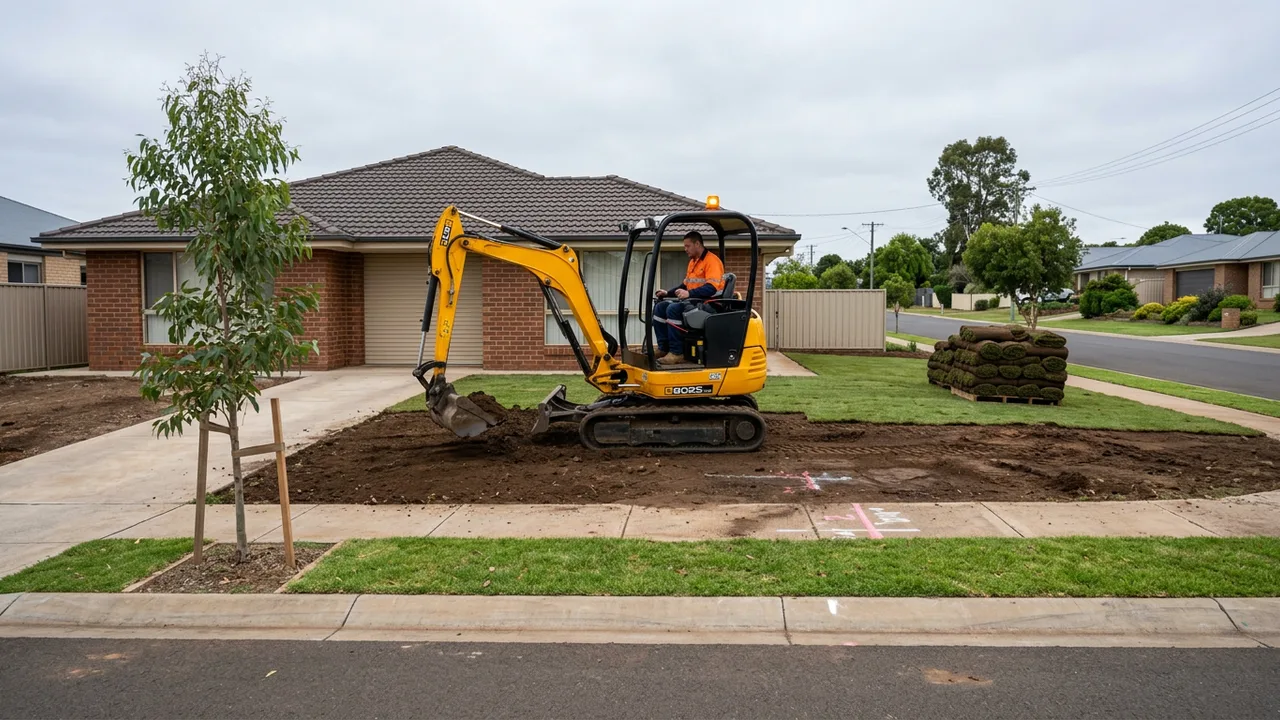
A mini excavator is the usual pick for house blocks. It is narrow, it tracks over lawn without tearing it up, and it digs trenches, post holes and small pads. A Dingo, the small walk-behind or ride-on loader, handles tight spots and light levelling.
A posi track is a compact tracked loader that pushes, carries and levels well on soft or uneven ground. It earns its place when a block needs a pad cut or a heap of soil shifted from one side to the other. Larger excavators suit bigger cuts on acreage, where there is room to bring them in.
Attachments change what one machine can do. An auger drills post holes and footings. A tilt mud bucket shapes a drain or a batter, which is a sloped earth face. A GP bucket, the general purpose digging bucket, does most of the soil moving.
Wet hire or dry hire on your Rangeville block
Wet hire means the machine arrives with an operator who does the digging. Dry hire means you take the machine and run it yourself on your own land.
Dry hire suits a straightforward job on flat or gently sloping ground, like a short trench or a handful of post holes. Wet hire is the better call on a steep batter, near a boundary, or anywhere a slip could put the machine into a neighbour's yard or a drain.
An experienced operator reads the ground as they go. They know when the soil is too soft to hold a bucket load and when a cut needs benching, which means stepping it back so the face does not slump.
The hire rate, minimum hire and any float or travel charge are set out before you book. Float is the truck and trailer that carries the machine to your street, and it is usually the line people forget to ask about.
Digging for retaining walls on the escarpment
Retaining walls are a common reason a Rangeville block needs a machine. A wall holds back a slope, so the dig behind and under it has to be right before any block or sleeper goes in.
The work usually starts with a cut into the hillside, then a level base for the footing. A mini excavator or posi track does this far faster than a shovel, and it keeps the cut square. Drainage behind the wall matters as much as the wall itself, because water pressure is what pushes walls over. A trench for agricultural pipe and a bed of gravel goes in as the wall rises.
For a tall wall or one close to a boundary, talk to your council or a building certifier before the dig starts. Approval is their decision, not the machine operator's.
Footings, trenches and pads around the house
Post holes for a fence or deck, footings for a shed, and trenches for drainage, water or power are all quick work for the right machine and attachment. An auger on a mini excavator drills a line of holes in a fraction of the time a post hole digger takes, and the holes come out the same depth.
Pad work is different. Cutting a level pad for a shed or a house on a sloping block means moving a lot of soil and deciding where it goes. Some goes to fill the low side. The rest is carted off, or spread on the block if there is room.
Call 000 straight away if a dig hits a gas line or a damaged power cable. Before any trench, get the underground services located so the bucket does not find them first.
Rangeville ground, access and slope
Rangeville sits on the eastern fringe of Toowoomba on the Darling Downs, at an elevation of 644 metres. The suburb runs from established streets and the East Creek drainage area in the west up to the crest and bushland edges of the Great Dividing Range, where its eastern boundary lies. That fall in the land shapes how a dig is planned.
Housing is mixed. Post-war streets, mid-century houses, later brick family homes and townhouses sit alongside large escarpment properties and pockets of rural-residential land. A townhouse yard needs a mini excavator that fits down a narrow side path.
Landmarks such as One Tree Hill, McKnight Park and Picnic Point Park sit within a suburb where block sizes vary, and a large block may take a posi track or a bigger machine.
Steeper ground calls for a machine that sits level and an operator who works across a slope with care. The suburb adjoins Middle Ridge, which was known as German Settlement at first.
The width of your side gate often decides between a mini excavator and a posi track faster than anything else. Wet soil on a slope also turns slippery under tracks, so the state of the ground on the day matters as much as the machine.
Services in Rangeville
- Mini excavator hire Compact digger hire for backyard digs, trenches and footings where a side gate rules out bigger machines.
- Excavator dry hire Hire an excavator without an operator, collect or have it floated in, and dig your own block your way.
- Excavator hire with operator A machine and a skilled operator arrive together, so the digging gets done while you get on with your day.
- Digger and backhoe hire Diggers and backhoes sized for footings, spoil loading and yard clearing on local homes and small sites.
- Dingo and mini loader hire Dingo and Kanga mini loaders for levelling, shifting soil and small trenches around paths, beds and fences.
- Posi track and skid steer hire Posi tracks and skid steers for levelling, site clean-up and spreading fill where ground is soft or uneven.
- Excavator attachments and augers Augers, tilt mud buckets and GP buckets fitted to the machine for post holes, footings and neat trenches.
- General plant hire Tipper trucks, loaders, dozers and rollers alongside the excavator when one machine will not cover it.
Frequently Asked Questions
Is an excavator hire contractor in Rangeville licensed and insured?
Get it priced
Got a trench, pad or yard to dig out? Tell us the job and get the right machine on site.
Share the details and we will help you take the next step with confidence.